Kyu Rhee

Omics Preclinical Laboratory

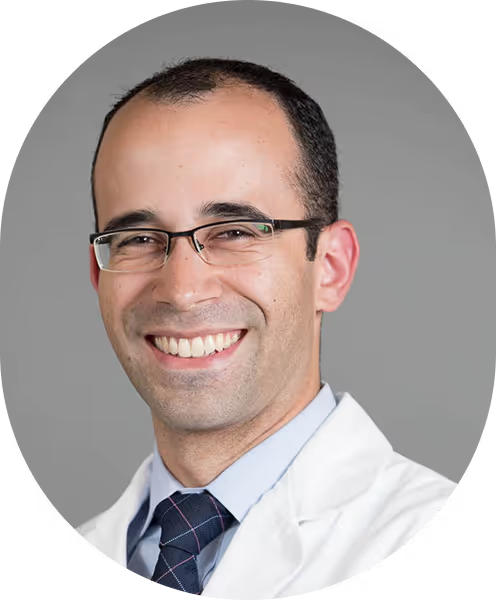
Dr. Rhee currently serves as professor of medicine in the Division of Infectious Diseases, associate professor of microbiology and immunology at Weill Cornell and associate attending physician at NewYork-Presbyterian Hospital/Weill Cornell Medical Center.  His clinical interests are in the areas of tuberculosis and antibiotic pharmacology.  His major research interests are in elucidating the basic physiology of Mycobacterium tuberculosis, the causative agent of TB, and identification of novel drug targets. Dr. Rhee received his undergraduate degree from Cornell University and his M.D. and Ph.D. degrees from the University of California, Irvine, followed by clinical training in internal medicine and infectious diseases at Weill Cornell, where he has remained on the faculty since 2005, and also co-directs the Medical Research Residency track in internal medicine.

As part of the PReDiCTR-TB Consortium Omics Preclinical Laboratory (Omics PL), we aim to backtranslate the clinical treatment shortening activity of current 4 month treatments into specific antimicrobial mechanisms of action and targets. We will do so by applying state-of-the-art metabolomic technologies to capture Mtb's biochemical response to drug treatment on a systems-level scale on a bulk population scale. We will also apply newly developed bacterial single cell RNA sequencing technologies to characterize Mtb's transcriptional response to these same treatments on a subpopulation level. Together, we aim to define molecular mechanisms and targets capable of achieving shorter, safer cures for TB.

Consortium Leadership

The consortium is led by four principal investigators who together bring broad and deep expertise in preclinical and clinical tuberculosis drug and regimen development.

Rada Savic
Data Science and Modeling Group
Dirk Schnappinger
Omics Preclinical Laboratory
Eric Nuermberger
JHU-mouse Preclinical Laboratory
Kelly Dooley
Scientific Leadership and Clinical Lead

Understanding the Role of the Consortium

The PReDiCTR consortium brings together scientists, modelers, and clinical experts to accelerate the discovery and optimization of TB drug regimens. By combining lab-based insights, computational modeling, and translational data, we create a seamless pipeline from preclinical research to real-world treatment.

Scientific & Operational Administration

Our consortium connects the brightest minds in TB research, clinical trial design, and data modeling — united to deliver better treatments, faster.

Dr. Savic is a Professor of Pharmacy and Medicine at UCSF, Co‑Vice Dean of Graduate Pharmacy Education, and Associate Director of Data Science at the UCSF Center for Tuberculosis. As Project Director for the PReDiCTR‑TB Consortium, she provides strategic leadership and oversees all administrative functions, including budgeting, compliance, reporting, vendor and contract management, and cross‑institutional coordination. A global leader in TB data science and modeling, she brings 20+ years in quantitative pharmacology, PK/PD, and biomarker analysis, with 15+ years focused on TB.

She has led major multi‑partner efforts, notably the WHO/BMGF‑funded TB ReFLECT consortium, generating evidence that reshaped TB regimen design and clinical trials, and has driven modeling across TBDA, UNITE4TB, CDC’s TB Trial Consortium, and USAID’s SMART4TB.

Her pediatric TB pharmacology work informed WHO dosing guidelines and supported FDA and EMA labeling. Within PReDiCTR‑TB, she leads the Data Science and Modeling Group and serves on the SLG, PFC, and Administrative Group. Her lab is a “go‑to” resource for rigorous modeling and data integration that advance effective, patient‑centered TB treatments.

Rada Savic, PhD, MBA
Gustavo Velásquez, MD, MPH
(Administrative Group Lead)

Dr. Velásquez is an Assistant Professor of Medicine in the Division of HIV, Infectious Diseases, and Global Medicine at the University of California, San Francisco. He is a practicing infectious disease physician who oversees a research program focused on therapeutic clinical trials for tuberculosis (TB).

He works with the UCSF Center for Tuberculosis (tb.ucsf.edu), the endTB consortium (endTB.org), the SMART4TB consortium (tbcenter.jhu.edu/smart4tb), and the Advancing Clinical Therapeutics Globally trials network (actgnetwork.org) on Phase 2 and Phase 3 randomized controlled trials evaluating new treatment regimens for drug-susceptible and drug-resistant TB. Active collaborations stemming from these clinical trials include pharmacokinetic, immunogenetic, and implementation sub-studies with the goal of influencing domestic and international guidelines for the treatment of TB, the leading cause of death worldwide from a single infectious agent.

Dr. Velásquez serves as the PReDiCTR-TB Administrative Group (AG) Lead. His work in PReDiCTR-TB, informed by his expertise in TB clinical trials, is motivated by the Consortium's goal to prioritize and advance the most promising TB regimens.

Dr. Gopalkrishnan is the Senior Scientific Program Manager for the PReDiCTR-TB Consortium in UCSF’s Department of Bioengineering and Therapeutic Sciences, overseeing the science, program design, coordination, and daily operations to prioritize and advance promising tuberculosis (TB) treatment regimens.

She leads strategic planning, implementation of key components, and management of timelines, budgets, and regulatory requirements across a distributed, multidisciplinary team. From 2023–2025, she directed scientific and administrative operations for two major multi-institutional initiatives at UCSF’s Quantitative Biosciences Institute (QBI): the $67.5M NIH-funded AViDD program and the $35M+ OpenADMET/Avoid-ome project supported by ARPA-H and the Gates Foundation.

These efforts united 50+ laboratories and 200 researchers across academia, biotech, and government to accelerate therapeutic development for global health threats. Across roles, she has built the operational infrastructure for effective multi-partner collaboration, including data-sharing systems, multi-institutional agreements, and vendor and contract oversight.

She integrates perspectives from chemistry, biology, structural biology, AI/ML, and clinical research to advance candidates and inform trial design. She partners closely with principal investigators, industry, and funders to align priorities, streamline workflows, and ensure clear communication, supporting safe, effective, and accessible antimicrobials.

Saumya Gopalkrishnan, MS, PhD
(Senior Scientific Program Manager)
Griffith Gao, MS
(DSMG Data Manager)

Mr. Gao is the Technical Lead for Data Science and AI in the PReDiCTR-TB Consortium at the University of California, San Francisco. He provides leadership in designing scalable infrastructure and building AI-powered tools to support high-impact biomedical research.

His work focuses on creating intelligent platforms that transform how researchers discover, manage, and analyze data, enabling streamlined, standardized, and automated workflows across multidisciplinary teams. Griffith specializes in AI/ML systems, large-scale data infrastructure, and architecting research automation platforms. He is passionate about leveraging generative AI, large language models (LLMs), and automated research workflows to accelerate scientific discovery and innovation.

His expertise aligns with the PReDiCTR-TB Consortium’s mission to advance promising tuberculosis (TB) treatment regimens through collaborative, data-driven approaches. In his role, Griffith leads technical initiatives that optimize research processes, enhance data accessibility, and empower teams to work smarter. He is committed to driving innovation in AI capabilities to support discoveries that improve human health and global health outcomes.

Mr. Shaffer is the Director of Research Strategy and Operations, bringing over 20 years of experience applying data-driven modeling, pharmacometrics, and decision analytics to advance global health and infectious disease interventions. He is a dedicated and experienced problem-solver, passionate about translating complex quantitative and qualitative data into actionable insight that supports value-driven, impact-based decision-making.

Across his career, Craig has built, led, and scaled high-impact analytic teams that integrate statistical modeling, decision science, and strategic forecasting to guide research prioritization and portfolio management. His work has informed treatment and prevention strategies across a broad global health portfolio, enabling stakeholders to assess risk, optimize resource allocation, and maximize public health impact.

In his role, Craig provides strategic and operational leadership at the intersection of research, analytics, and implementation. He partners closely with scientific, clinical, and operational teams to ensure that modeling and decision frameworks are aligned with real-world constraints and programmatic goals. His expertise strengthens evidence-based planning and helps drive innovative, sustainable solutions to complex infectious disease challenges.

Craig Shaffer, MS
(Director of Research Strategy and Operations)

Our Consortium Framework

Ensuring Inclusive TB Progress

To ensure that community voices are heard, a representative from the Treatment Action Group (TAG) serves on the SLG and as a liaison to the Global TB Community Advisory Board (GCAB). Within the SLG, a Pediatric Focus Committee (PFC) is dedicated to ensuring that advances in TB drug development benefit children, without delay.


Preclinical and Data Science Collaboration

To design novel TB regimens and prioritize them for clinical trials, the PReDiCTR-TB Consortium engages a multidisciplinary Preclinical Laboratory Group (PLG) and a Data Science and Modeling Group (DSMG), supported by six Preclinical Laboratories (PLs) and the Savic Laboratory, respectively.


SLG Members and Partnerships

The Scientific Leadership Group (SLG) is comprised of PLG and DSMG leadership, representatives from trials networks (ACTG, IMPAACT, TBTC); drug developers (TB Alliance, GSK, Janssen, Otsuka); UNITE4TB and PANTB leadership; preclinical groups carrying out multidrug combination studies (Evotec) or developing new tools for TB regimen development (ERA4TB); and the Bill & Melinda Gates Foundation’s TBDA and TB Drug Initiative Groups. SLG membership will be dynamic, with new members invited to join as new trials networks form and new drug sponsors enter the TB arena.

Meet Our Scientists

PReDiCTR-TB Consortium Principal Investigators

Rada Savic
Data Science and Modeling Group
Dirk Schnappinger
Omics Preclinical Laboratory
Jeremy Rock
Omics Preclinical Laboratory
Kelly Dooley
Scientific Leadership and Clinical Lead
Jansy Sarathy
DMPK Preclinical Laboratory
Eric Nuermberger
JHU-mouse Preclinical Laboratory
Gregory Robertson
CSU-mouse PL
Nicholas Walter
PhyBM Preclinical Laboratory
Martin Voskuil
PhyBM Preclinical Laboratory
Bree Aldridge
DiaMOND Preclinical Laboratory
Sabine Ehrt
Omics Preclinical Laboratory
Kyu Rhee
Omics Preclinical Laboratory

Relationship with TB Alliance

The PReDiCTR-TB Consortium has established a strong relationship with TB Alliance, a not-for-profit product development partnership dedicated to TB regimen development. TB Alliance manages the largest pipeline of new TB drugs in history, and TB Alliance colleagues are scientific partners (and key personnel) in this consortium.

Read More

Collaborating with Global Partners

Our work is supported by the NIH (grant number UM1 AI179699) and leading academic and clinical partners worldwide.

2025 Global Tuberculosis Report

The 2025 Global Tuberculosis Report was produced by the WHO Department for HIV, Tuberculosis, Hepatitis and Sexually Transmitted Infections. The core report team included Taghreed Adam, Nimalan Arinaminpathy, Annabel Baddeley, Mathieu Bastard, Dennis Falzon, Katherine Floyd, Nebiat Gebreselassie, Avinash Kanchar, Irwin Law, Cecily Miller, Hazim Timimi, Yi Wang and Takuya Yamanaka. This team was led by Katherine Floyd.

Be a Partner with Us

We have secured commitments from other commercial and noncommercial partners, which include GSK, Janssen, Otsuka, Gates Medical Research Institute (GMRI), and Ludwig-Maximilians-Universität (LMU), that will expand our access to novel drug assets and data. Each of these sponsors has ongoing or recent collaborations with the Consortium’s scientific groups and/or with TB Alliance, but this landscape of collaborations is fragmented. Their participation in the PReDiCTR-TB Consortium will generate a unified framework to access the tools, experience, and expertise of the Consortium and coordinate research activities to fully realize the potential of their assets, while at the same time increasing the probability that the Consortium will deliver highly effective regimens to trialists and, in the process, define a critical path of key preclinical experiments and translational modeling methodologies for future regimen selection and optimization.

We have established key partnerships with major clinical trials networks that can advance the most promising regimens into clinical trials. These include ACTG, TBTC of the Centers for Disease Control (CDC), and IMPAACT. At the same time, we have collaborative partnerships with other consortia that have platform trials being built to test regimens for TB, namely UNITE4TB and PAN-TB, and their preclinical counterparts the European Regimen Accelerator for TB (ERA4TB) and TB Drug Accelerator (TBDA).

Would You Like to Be a Partner with Us?

Accelerating the Development of TB Treatment

Contact Us

Kyu Rhee

,

MD, PhD

Omics Preclinical Laboratory

Dr. Rhee currently serves as professor of medicine in the Division of Infectious Diseases, associate professor of microbiology and immunology at Weill Cornell and associate attending physician at NewYork-Presbyterian Hospital/Weill Cornell Medical Center.  His clinical interests are in the areas of tuberculosis and antibiotic pharmacology.  His major research interests are in elucidating the basic physiology of Mycobacterium tuberculosis, the causative agent of TB, and identification of novel drug targets. Dr. Rhee received his undergraduate degree from Cornell University and his M.D. and Ph.D. degrees from the University of California, Irvine, followed by clinical training in internal medicine and infectious diseases at Weill Cornell, where he has remained on the faculty since 2005, and also co-directs the Medical Research Residency track in internal medicine.

As part of the PReDiCTR-TB Consortium Omics Preclinical Laboratory (Omics PL), we aim to backtranslate the clinical treatment shortening activity of current 4 month treatments into specific antimicrobial mechanisms of action and targets. We will do so by applying state-of-the-art metabolomic technologies to capture Mtb's biochemical response to drug treatment on a systems-level scale on a bulk population scale. We will also apply newly developed bacterial single cell RNA sequencing technologies to characterize Mtb's transcriptional response to these same treatments on a subpopulation level. Together, we aim to define molecular mechanisms and targets capable of achieving shorter, safer cures for TB.

Sabine Ehrt

,

PhD

Omics Preclinical Laboratory

The research in my laboratory focuses on the pathogenesis of tuberculosis (TB) with the goal to aid the development of new chemotherapies and vaccines. We investigate the molecular mechanisms that enable Mycobacterium tuberculosis to establish and maintain chronic infections and resist host defenses. We apply molecular genetics to identify new points of vulnerability, which could be targeted to kill populations that escape current chemotherapy in people with latent M. tuberculosis infection. We also analyze host immune factors that are required to control M. tuberculosis and try to identify new strategies to generate improved TB vaccines.

As part of the PReDiCTR-TB Consortium, the Omics Preclinical Laboratory (Omics PL) combines genomics with metabolomics and transcriptomics to study drug regimens of varying clinical efficacy to define mechanism-based biomarkers of the clinical efficacy of combination regimens and functional drivers of their efficacy.

Bree Aldridge

,

PhD

DiaMOND Preclinical Laboratory

Our research focuses on designing optimized therapies for TB using cell biology and engineering approaches. Our lab is a multidisciplinary research team, integrating quantitative measurement with computational modeling and analysis to create intuitive descriptions of complex cell biology. We focus our studies on (1) characterizing single-cell determinants of mycobacterial drug tolerance, (2) understanding how growth heterogeneity is controlled, and (3) engineering combination therapy.

As part of the PReDiCTR-TB Consortium, the DiaMOND Preclinical Laboratory (DiaMOND PL) uses a geometric optimization of traditional drug combination assays, to efficiently measure drug interactions and combination efficacies. We aim to use systematic measurement of drug combinations to optimize TB drug regimens and learn how to construct improved combinations. Our methods are broadly applicable to other disease models.

Martin Voskuil

,

PhD

PhyBM Preclinical Laboratory

Dr. Voskuil’s research is focused on the ability of aerobic bacterial pathogens to exist in non-replicating states that are distinct from the replicating bacteria most often studied. We hypothesize that these states are central to the pathogens survival during latent infections and their ability to tolerate conventional drug treatment. The physiological state of Mycobacterium tuberculosis during latent infection has been a focus of our research. A primary reason for the continued threat from M. tuberculosis lies in its ability to establish an asymptomatic latent infection, which serves as a reservoir for future infections. One-third of the world's population is latently infected with tuberculosis and current treatment of latent infections is inefficient. Little is known about the nature of the latent state including the physiological and metabolic state of the bacilli. In vitro studies demonstrate M. tuberculosis, an obligate aerobe, has the ability to undergo a distinct physiologic adaptation to a non-respiring state in response to low O2 levels and or the presence of the respiratory stresses, nitric oxide (NO) and carbon monoxide (CO). The respiratory stress-induced state is marked by bacteriostasis, in addition to metabolic, chromosomal, and structural changes in the bacteria. These stresses instigate a rapid and dramatic induction of a set of 48 genes (DosR regulon) in M. tuberculosis. These genes are coordinately regulated and encode functions that are essential for survival in the absence of aerobic respiration. NO, CO and O2 levels modulate the induction of the DosR regulon and concurrently control bacterial respiration and growth. It appears that control of respiration by NO and CO production and O2 deprivation via granuloma formation are potent components of immune control of M. tuberculosis. However, the bacilli have evolved mechanisms to survive and persist during the growth arresting state produced by active immune pressure. Research in my laboratory utilizes genetic, microarray, metabolomic, biochemical, and animal studies to investigate the mechanisms employed by M. tuberculosis to survive during latent infection, with a particular focus on the role of the DosR regulon and the central metabolic processes essential in the absence of aerobic respiration.

As part of the PReDiCTR-TB Consortium, PhyBM Preclinical Laboratory (PhyBM PL) the Voskuil Lab will perform in vitro RS ratio analysis and high throughput RS assays of drugs and drug combinations and process preclinical samples for RS ratio and SEARCH-TB molecular analysis provided by PReDiCTR PLs and associated laboratories. In vitro drug assessment based on impact on pathogen adaptability is portable to murine models and will accelerate identification of drug combinations with optimal treatment shortening properties and ability to overcome drug resistance.

Nicholas Walter

,

MD, PhD

PhyBM Preclinical Laboratory

Dr Walter’s research focuses on development and practical application of novel pharmacodynamic markers with the goal of accelerating new regimen development.   Dr Walter’s team has developed a portfolio of molecular tools that provide information on the pathogen’s physiologic processes (i.e., “pathogen health”) rather than pathogen burden.

This orthogonal perspective reveals insights distinct from traditional culture-based pharmacodynamics.  The Walter lab applies these tools in conjunction with other PReDiCTR-TB labs to maximize information available for decision-making.

Gregory Robertson

,

PhD

CSU-mouse PL

Dr. Robertson’s research is focused on the field of Mycobacterium tuberculosis host-pathogen interactions with emphasis on the development of novel preclinical tools, use of TB mouse models for drug evaluation, and evaluation of drug activity and resistance in vitro and in vivo. He also leads preclinical animal studies as part of the Consortium for Applied Microbial Metrics including other investigators from the University of California San Francisco, Denver VA Medical Center, and CU Anschutz Medical Campus.

As part of the PReDiCTR-TB Consortium, the CSU-Mouse Preclinical Laboratory (CSU-Mouse PL) focuses on optimizing translational value of preclinical mouse models. Providing knowledge and expertise in preclinical drug assessments in mice: Heterogeneity of disease and shorter, low resource predictive models – complementary to the JHU-Mouse PL.

  • Member and Animal model lead for the B&MGF TB Drug Accelerator program
  • Founding member and Animal Lead for the Consortium for Applied Microbial Metrics (PhyBM PL)
  • Co-I/Animal model consultant for the NIH in vivo IDIQ contract at  CSU
  • Co-developer of the RS ratio and SEARCH-TB PD markers (PhyBM PL, DSMG)
  • Co-developer of the Ultra Short Source Model (PhyBM, DiaMOND PLG, DSMG)

Jansy Sarathy

,

PhD

DMPK Preclinical Laboratory

Dr. Sarathy’s research focuses on applying site-of-disease pharmacokinetic-pharmacodynamic (PK-PD) concepts to provide a pharmacological rationale for tuberculosis treatment efficacy. Mycobacterium tuberculosis (MTB) is a highly successful pathogen because it is well adapted to surviving in diverse host microniches with variable vasculature and distinct environmental conditions. Its ability to go into a nonreplicating drug persistent (NRP) state in response to stresses encountered within the host is a major impediment to curing the disease. The necrotic core of tuberculous lesions and cavities, commonly referred to as caseum, are reservoirs of extracellular bacteria that are recalcitrant to antibiotic treatment. Furthermore, suboptimal drug distribution in the non-vascularized caseous compartment results in pockets of subinhibitory drug concentrations and increased chances of emergence of resistant mutants. Effective eradication of this subpopulation using multidrug regimens promises to shorten the duration of tuberculosis chemotherapy and prevent disease relapse.

As part of the PReDiCTR-TB Consortium, the Drug Metabolism and PharmacoKinetics Preclinical Laboratory (DMPK PL) brings a fully integrated mass spectrometry bioanalytical platform and biosafety level 3 facilities at CDI to study drug metabolism and pharmacokinetics properties of existing TB drugs and compounds in preclinical development. This work is enabled by lesion-centric PK studies in several animal models of TB infection. The coupling of laser capture microdissection (LCM) to liquid chromatography –tandem mass spectrometry (LC-MS/MS) analysis supports the detailed spatial and temporal resolution of drug distribution in TB granulomas.

Eric Nuermberger

,

MD

JHU-mouse Preclinical Laboratory

Research in the Nuermberger lab focuses primarily on experimental chemotherapy for tuberculosis. We use proven murine models of active and latent tuberculosis infection to assess the effectiveness of novel antimicrobials. A key goal is to identify new agents to combine with existing drugs to shorten tuberculosis therapy or enable less frequent drug administration. We're also using a flow-controlled in vitro pharmacodynamic system to better understand the pharmacodynamics of drug efficacy and the selection of drug-resistant mutants during exposure to current agents.

As part of the PReDiCTR-TB Consortium, the JHU-Mouse Preclinical Lab (JHU-Mouse) in the Nuermberger Lab focuses primarily on experimental chemotherapy for tuberculosis. We use proven murine models of active and latent tuberculosis infection to assess the pharmacokinetics and pharmacodynamics of novel antimicrobials and the efficacy of combination drug regimens. Key goals are to identify novel combinations of new or existing drugs and optimize the contribution of each component to create new regimens capable of shortening or otherwise simplifying tuberculosis therapy and restricting the emergence of resistance.

Kelly Dooley

,

MD, PhD, MPH

Scientific Leadership and Clinical Lead

Trained as an Infectious Diseases specialist and Clinical Pharmacologist, Dr. Dooley’s research focuses on tuberculosis therapeutics with an emphasis on clinical trials of TB and HIV-TB co-treatment. She has served as lead investigator for trials of therapeutics for drug-sensitive and drug-resistant TB, HIV-TB, and pediatric TB meningitis funded by the NIH, the FDA, UNITAID, and industry partners. She is on the TB scientific committees of the Advancing Clinical Therapeutics Globally (ACTG) and International Maternal Pediatric Adolescent AIDS Clinical Trials (IMPAACT) networks and is the Chair of the Core Science Group (CSG) of the US CDC’s Tuberculosis Trials Consortium (TBTC).  She serves regularly on panels or guidelines committees for the World Health Organization.

As the Clinical Lead within the PReDiCTR-TB Consortium, Dr. Dooley’s serves as the liaison between the Preclinical Laboratory Group (PLG) and Data Science and Modeling Group (DSMG) scientists and the global network of TB trialists the consortium is aiming to serve. She serves as Chair of the Scientific Leadership Group (SLG), and her duties include member selection, coordination of sessions, and development of the next generation of researchers through the consortium’s Early Career Interest Group (ECIG).  The SLG is comprised of leaders in TB therapeutics research globally. They represent the networks, organizations, and companies most active in trials of novel TB therapeutics. The Pediatric Focus Committee (PFC) is a sub-group of the SLG with specific expertise in TB disease and its treatment in children. PFC members have broad experience in clinical trial design, pharmacometrics, biomarkers, pathophysiology, and immunology related to pediatric TB.

Jeremy Rock

,

PhD

Omics Preclinical Laboratory

Mycobacterium tuberculosis is the leading cause of death due to infectious disease. By investigating the mechanisms that enable this bacterium to cause tuberculosis and evade current antibiotics, the Rock lab, at The Rockefeller University, aims to lay the foundation for new therapeutic strategies to improve control of this epidemic.

Despite the discovery of antibiotics, tuberculosis (TB) remains an enduring global public health threat. New drugs, drug regimens, and innovative approaches to limit drug resistance are desperately needed—and to facilitate their development, the Rock lab seeks to provide a more complete understanding of the genetic and biochemical basis of Mycobacterium tuberculosis (Mtb) pathogenesis.

Genetic studies of this bacterium have thus far been hampered by the difficulties associated with conventional genetic tools. To fill this methodological gap, Rock and colleagues developed a CRISPR interference (CRISPRi) gene knockdown method for Mtb. This transformative tool is enabling the systematic interrogation of gene function in Mtb using high-throughput approaches to previously intractable problems in the field. The Rock lab uses this and other methods to study the mechanisms that enable chronic infection, antibiotic tolerance and resistance, and large-scale genetic and chemical interactions.

TB is a chronic, progressive disease. In most cases, the host immune system is capable of restraining but not eliminating Mtb, leading to lifelong infection. The mechanisms that enable the pathogen to persist in the face of a robust adaptive immune response, sometimes for decades, are poorly understood. The Rock lab is using new approaches to define the genetic basis for persistent Mtb infection.

Mtb infection can be treated with antibiotics. However, effective TB treatment requires a combination of four drugs taken for a minimum of six months. This lengthy treatment, thought to be necessitated by the presence of antibiotic-tolerant bacilli that arise during infection, is one of the most important roadblocks to effective TB control. Moreover, antibiotic tolerance can ultimately facilitate the evolution of antibiotic resistance, thereby fueling the growing problem of drug-resistant TB. The Rock lab is currently investigating the molecular mechanisms of antibiotic tolerance, as well as the mechanisms by which the bacterium can ultimately evolve antibiotic resistance.

Finally, the lab is interested in using genome-scale genetic and chemical interaction mapping to improve Mtb chemotherapy. The current four-drug combination to treat TB was developed in the 1960s. Rock seeks to better understand how anti-TB drugs (and combinations) work with the long-term goal of identifying ways to improve therapies by reducing treatment time and limiting the emergence of drug resistance.

As part of the PReDiCTR-TB Consortium, the Omics Preclinical Laboratory (Omics PL) will define in vitro biomarkers of combination regimen efficacy, as well as the functional drivers underlying that efficacy.

Dirk Schnappinger

,

PhD

Omics Preclinical Laboratory

The Schnappinger Lab studies Mycobacterium tuberculosis with the goal to facilitate the development of new drugs and vaccines to treat or prevent Tuberculosis. This work began with developing a regulatory system that allows to turn Mtb genes on and off, both in vitro and during infections. The Schnappinger lab now use this system (i) to evaluate Mtb gene products as new targets for TB drug development by documenting the impact of their genetic inactivation on growth and persistence of Mtb in vitro and in mice; (ii) to help elucidate the mechanisms by which small-molecules inhibit the growth of Mtb; (iii) to construct mutants for target-directed whole-cells screens; and (iv) to measure vulnerability of Mtb to the partial, CRISPRi-mediated inactivation of individual genes.

As part of the PReDiCTR-TB Consortium, the Omics Preclinical Laboratory (Omics PL) faciliates the development of new medicines for treatment or prevention of TB. They assess M. tuberculosis gene products as potential new drug targets by characterizing how their inactivation affects bacterial growth and persistence in vitro and during infection, and by helping to elucidate the mechanisms through which small molecules inhibit M. tuberculosis growth.

Rada Savic

,

PhD, MBA

Data Science and Modeling Group

Research in the Savic Lab focuses on data integration and the transformative potential of computational tools and artificial intelligence to advance drug development and routine drug therapy in infectious diseases including special populations such as children and pregnant women. Dr. Savic applies innovative, quantitative, and systems pharmacology methods to propose optimized and precision dosing strategies, data-driven risk stratification algorithms, and inspires new clinical simulation tools across the infectious disease landscape. Dr. Savic has unique expertise in data, modeling, and knowledge integration that positions her at the center of many development projects where she collaborates with teams across all drug discovery and development stages.

As part of the PReDiCTR-TB Consortium, the Data Science and Modeling Group (DSMG) will integrate, analyze, and translate experimental and clinical data to optimize TB drug and regimen development. It will support cross-network prioritization of regimens and help implement standardized data management workflows to ensure secure collection, storage, access, and exchange of data. Preliminary PLG data will be analyzed by the DSMG to generate model-informed recommendations for iterative preclinical studies. Using advanced statistical and mathematical modeling, the DSMG will integrate data across platforms to predict the performance of novel regimens in adults and children and guide key decisions on regimen selection and progression to clinical development.